LAST UPDATED 02/18/2010 * VISITOR COUNT: 000047,192 * IF YOU HAVE SEEN THIS FIGURE PLEASE WRITE IN * THIS PAGE BEST VIEWED AT 800x600 * PROOF IS EVERYWHERE IF YOU LOOK * TEN APPEARANCES / FOURTEEN THOUSAND YEARS *
★ THE FIGURE HAS BEEN SEEN SINCE 12,000 BCE ★
::: welcome to :::
THE BOO ARCHIVE
- A SMALL HISTORY OF AN IMPOSSIBLE MARK -
collected notes on the unidentified symbol known appearances of the figure
compiled & maintained by CLIVE FINCH (amateur. hobbyist. not an expert. see below.)
! READ THE WHOLE PAGE BEFORE MAKING UP YOUR MIND. !
I FIRST NOTICED THE PATTERN BY ACCIDENT.
At the time I was collecting odd symbols from old photographs, excavation plates, manuscript scans, and bits of local history that had been digitised badly enough to make everything look suspicious. Most of it turned out to be exactly what you would expect: cracks in plaster, damaged ink, overexcited captions, Victorian misreadings, and the occasional smear mistaken for something significant.
But this one kept returning.
It is a small figure, simple enough to dismiss at first glance: rounded top, two dark circular eyes, tapering or draped lower half. Crude in some examples, deliberate in others. It appears painted, scratched, carved, chalked, doodled, or rendered as a strange little graphic fault, depending on the period. On its own, any one instance would be easy to explain away. Taken together, they become harder to ignore.
The earliest example in this collection is a cave marking in southern France, tentatively dated to around 12,000 BCE. After that the figure appears intermittently, separated by centuries and cultures with no obvious connection: an Egyptian tomb wall, a scratched graffito on Greek pottery, a marginal mark in an illuminated manuscript, a carving in a plague-era church stall, a faint sketch in an alchemist's notebook, street wall graffiti in Whitechapel, chalk in a wartime bunker, a doodle-like shape on paperwork at a moon tracking station, and finally what may be the same form appearing as a glitched icon on a home computer in 1996.
I do not claim any of this proves a hidden order, a lost religion, a universal sign, or anything quite so dramatic. It may be coincidence. It may be a shape simple enough to reinvent endlessly. It may be an in-joke passed invisibly through history by people I will never identify. Or it may be something else entirely.
This page is an attempt to gather the known examples in one place.
If you have seen the same figure elsewhere - in a scan, photograph, notebook, carving, print, screenshot, wall mark, catalogue plate, or anything equally obscure - I would very much like to hear about it. Even if it turns out to be nothing, it is at least a very persistent nothing.
» ABOUT THE COMPILER «
I am not an archaeologist, historian, conservator, or epigrapher. I am simply a hobbyist with a weakness for overlooked details and a folder full of increasingly unhelpful notes. What began as a curiosity has become a personal archive of recurring appearances of the same improbable mark. The entries below combine image captions, catalogue notes, secondary references, and a small amount of reconstruction where the original records are incomplete.
- C. Finch.
THE TIMELINE - TEN KNOWN APPEARANCES
Listed in order of estimated age of the symbol. Dates of discovery appear in each entry. All images are reproductions from originals.Click any image to open it full-size in a new tab.
01c. 12,000 BCE
SOUTHERN FRANCE - CAVE WALL
Location: Limestone chamber near Les Eyzies, Dordogne, France Discovered: 17 September 1923 By: Dr. Lucien Varet (1889–1964), French prehistorian & cave surveyor
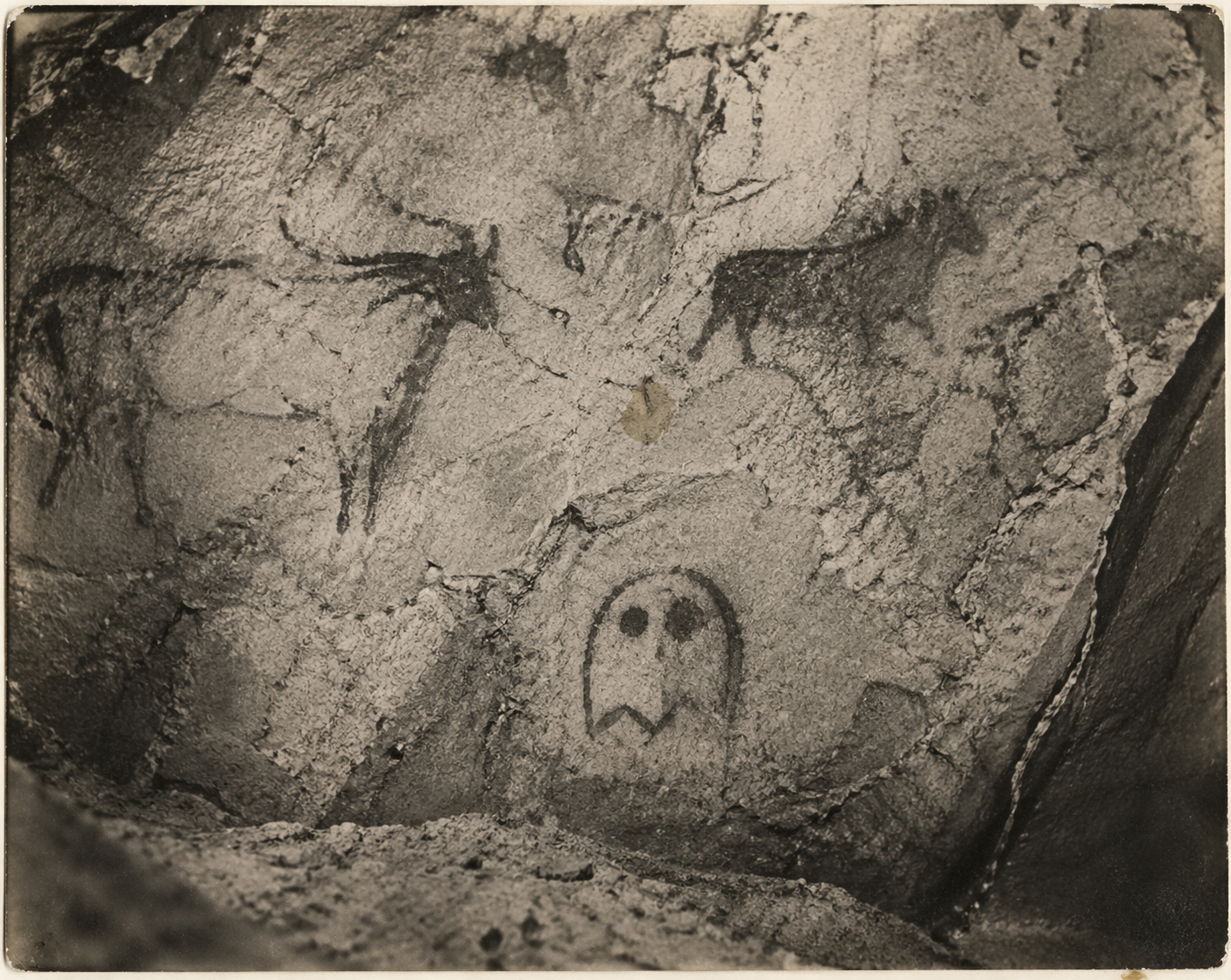
fig. 1 - cave wall, southern France. ochre & charcoal. "it sits too deeply in the skin of the wall."
Image note: A prehistoric cave wall bearing faded ochre and charcoal animal paintings on rough limestone. Near the lower section is a simple dark figure, rounded at the top with two prominent circular eyes. Unlike the surrounding marks, which are mostly geometric or animal in form, the symbol appears oddly self-contained.
Case note: Recorded during a secondary survey of a partially collapsed painted chamber containing bison, red deer, and abstract black markings. Varet first described the figure as an "atypical anthropoid simplification," then later admitted it had no obvious parallel in the cave repertory of the region. The pigment appears deeply absorbed into the rock surface, with weathering consistent with the surrounding composition.
“I do not believe it recent. It sits too deeply in the skin of the wall.”
- L. Varet, field note, Sept. 1923
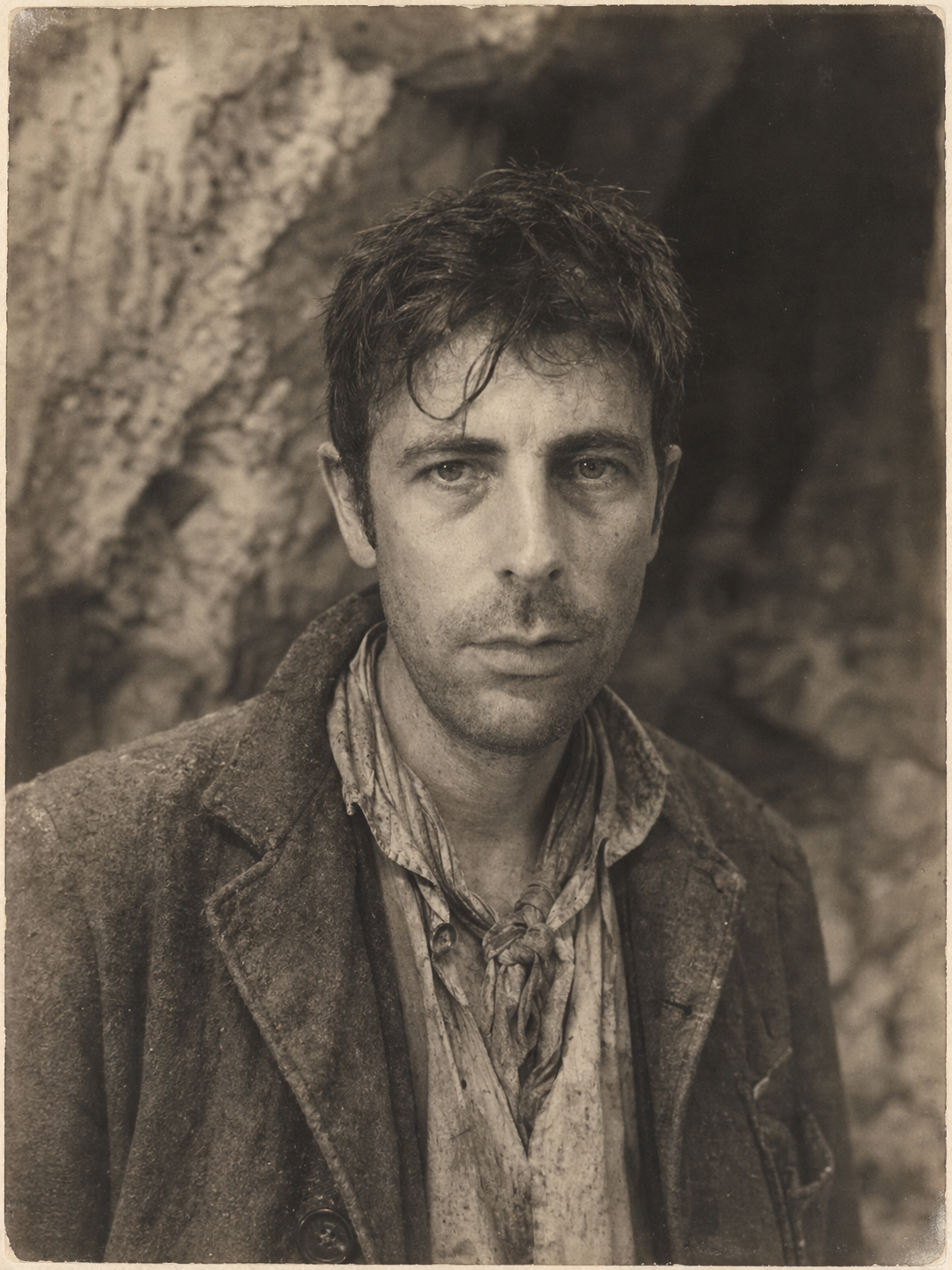
DR. LUCIEN VARET portrait, c. 1923
A regional excavator trained in Bordeaux, known for careful sketching and very cautious interpretation. He spent much of the 1920s documenting lesser-known painted caves in the Dordogne. Respected for his recording methods, he was regarded as conservative to the point of frustration and rarely committed himself to bold claims in print.
02c. 1450 BCE
THEBAN NECROPOLIS - TOMB OF NEFER-HOTEP
Location: South wall, west end, Tomb of Nefer-hotep, Thebes Discovered: 12 February 1908 By: Gerald E. Winlock Hale (1878–1943), British field recorder & epigrapher
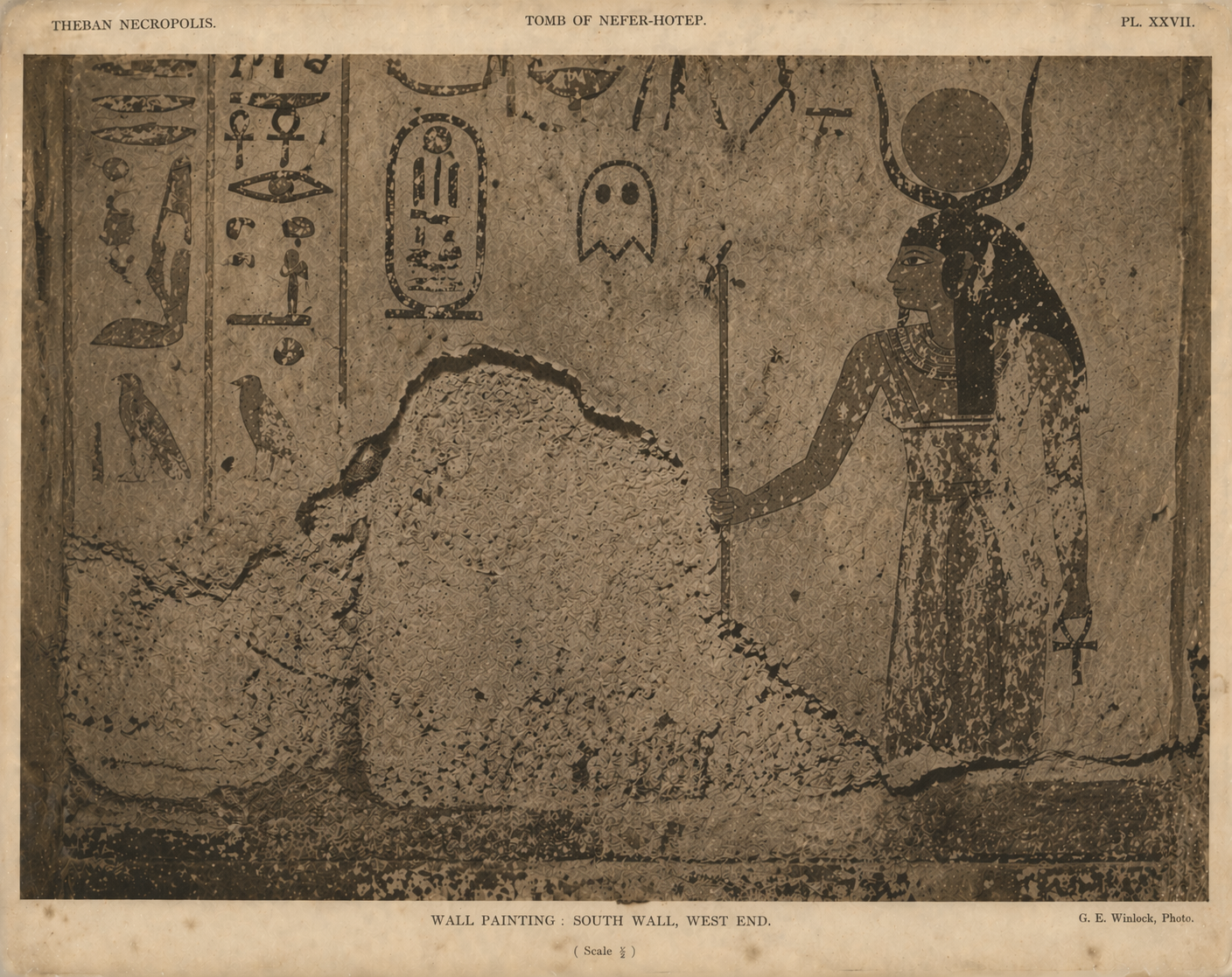
fig. 2 - Theban Necropolis. Tomb of Nefer-hotep. South Wall, West End. G.E. Winlock, Photo.
Image note: A damaged wall painting inside an Egyptian tomb chamber, with cracked plaster, faded mineral pigments, and incomplete funerary imagery. At the edge of a broken painted register is a compact dark figure that does not appear to belong to the formal scene.
Case note: The mark was reportedly noticed during cleaning and recording of smoke-blackened plaster. Enough pigment survives to show a rounded upper form and two filled circular "eyes." Hale noted that it did not resemble standard funerary symbols, mason's marks, or known later visitor graffiti. Its isolation within the damaged area suggests it was placed intentionally, though its relationship to the surrounding scene remains uncertain.
“It is too deliberate to be accidental and too self-contained to belong naturally to the wall.”
- G.E.W. Hale, 1908
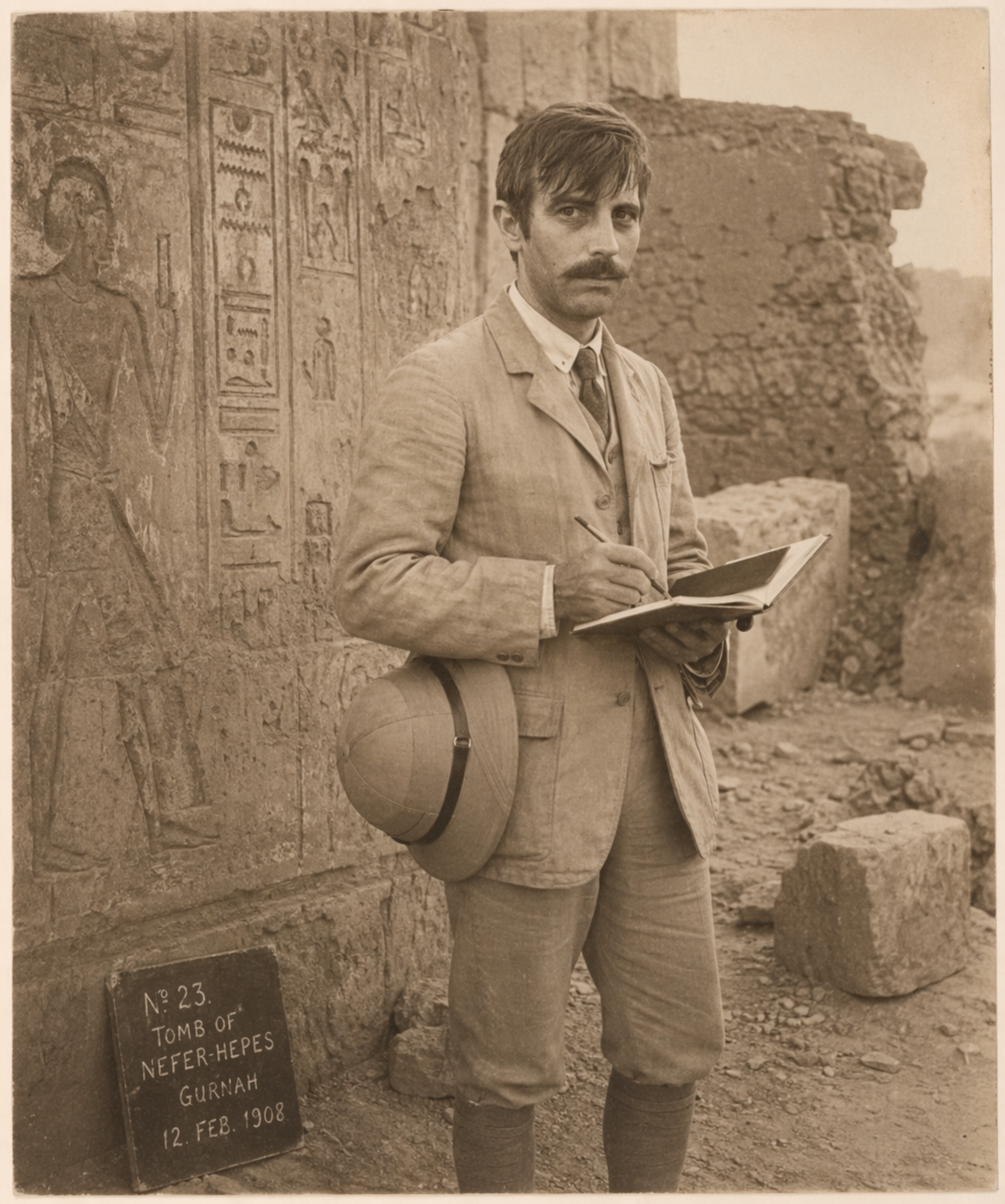
GERALD E. WINLOCK HALE "TOMB OF NEFER-HEPES GURNAH 12 FEB 1908"
A field recorder attached to a private Theban survey, valued for his patience with damaged surfaces and partial inscriptions. He published little under his own name, but his field sheets were considered unusually precise. His surviving notes suggest a particular fascination with marks that fell outside normal symbolic systems.
03c. 320 BCE
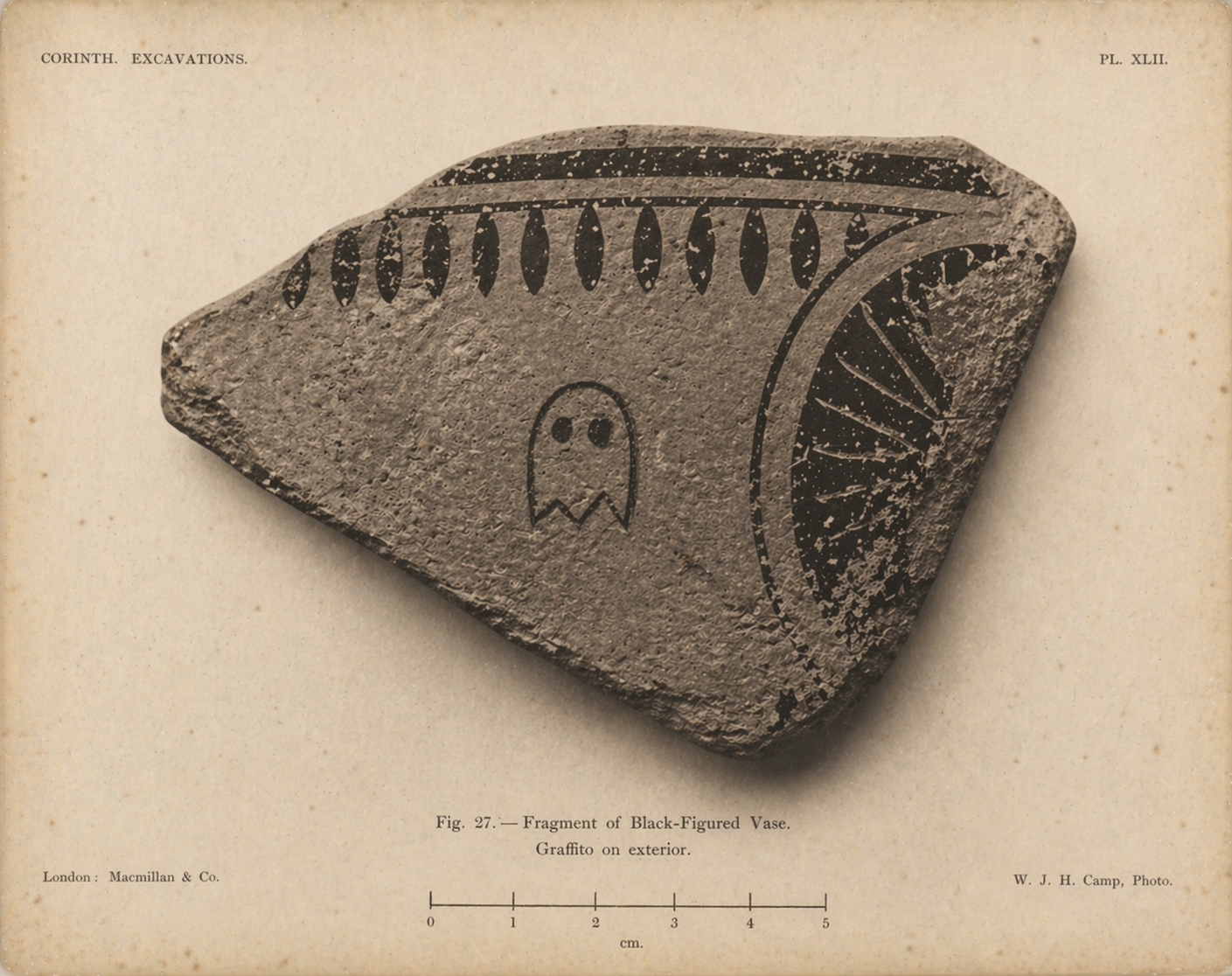
CORINTH - GREEK POTTERY SHARD
Location: Corinth excavations - graffito on exterior of black-figured vase fragment Discovered: 12 May 1891 By: Thomas Edwin Lark (1862–1930), junior registrar & excavation assistant
fig. 3 - Corinth Excavations. Fig. 27 - fragment of Black-Figured Vase Graffito on exterior. London, Macmillan & Co. W.J.H. Camp, Photo.
Image note: A catalogue photograph of a pottery fragment showing surviving black-figure decoration and a lightly incised graffito on the exterior surface. The graffito forms a rounded little figure with two circular eye-like punctures.
Case note: Lark described the mark as "a childish or private sign" and briefly considered whether it might represent an owner's mark added after firing. The incision is worn smooth in its grooves, which argues against a modern addition. Unlike casual scratches elsewhere on the sherd, this example has a surprising sense of intention.
“One has the absurd sense that the little thing is looking back.”
- T.E. Lark, field label, 1891
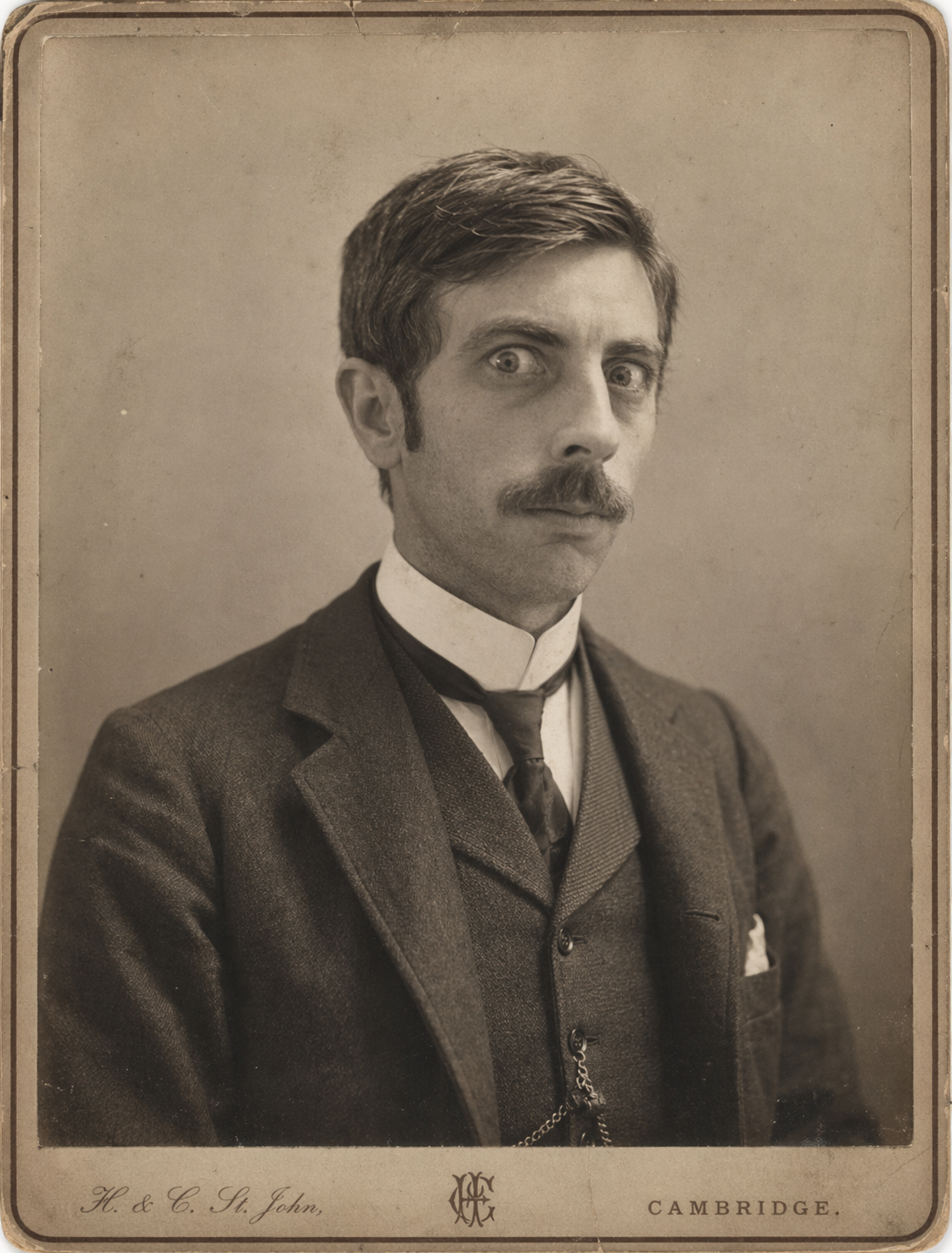
THOMAS EDWIN LARK studio mark: H&J St John, Cambridge
Worked on several eastern Mediterranean digs before moving into museum cataloguing. He had a reputation for taking minor finds seriously, especially marks and fragments that senior excavators tended to ignore. Several of his field labels survive because he wrote unusually detailed descriptions for small objects.
04c. 790 CE
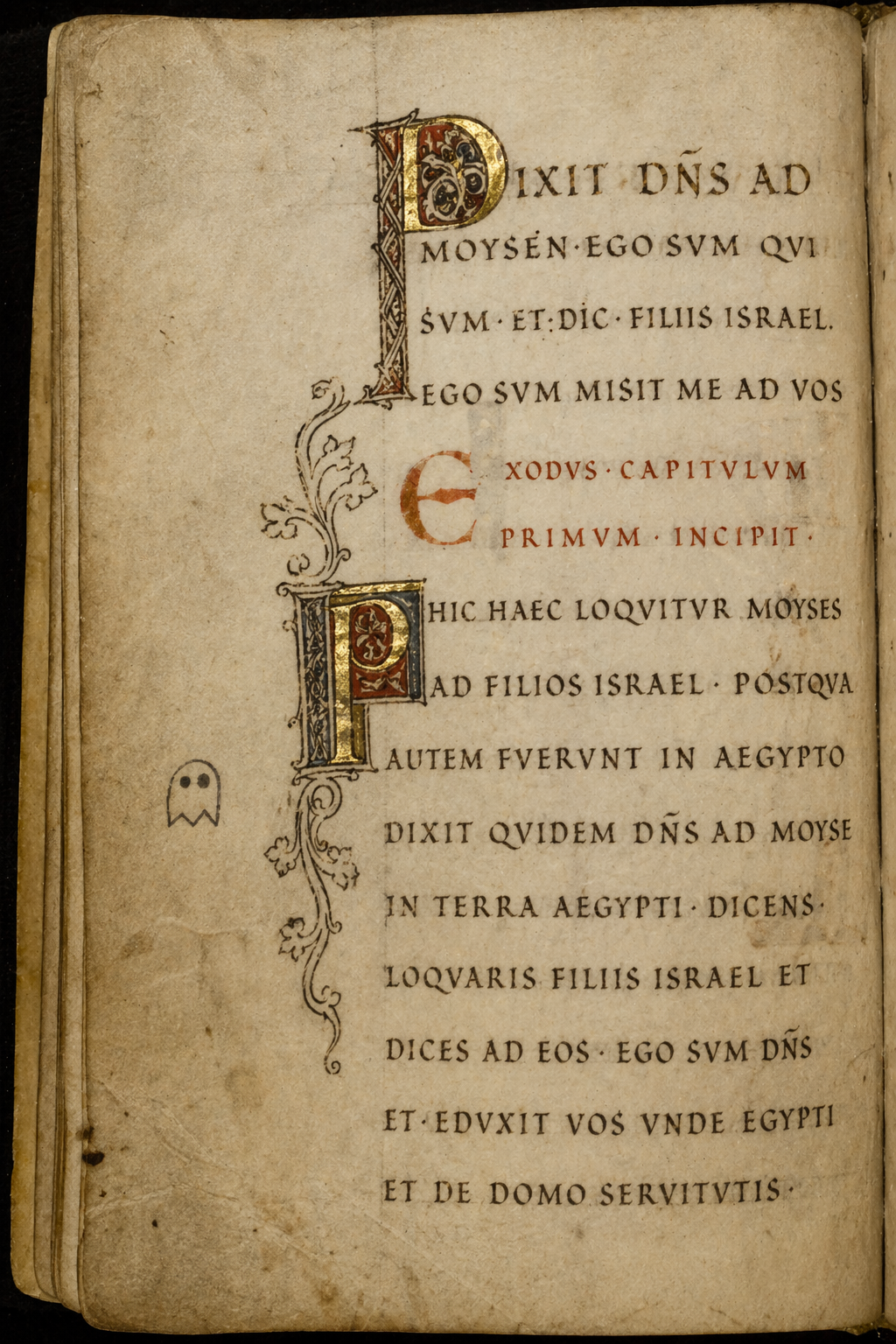
NORTHERN FRANCE - CAROLINGIAN MANUSCRIPT MARGIN
Location: Outer margin of an early Carolingian manuscript page Discovered: 3 November 1954 By: Adrian Mercier Bell (1916–1982), manuscript conservator
fig. 4 - outer margin, Carolingian manuscript, northern France. detail at magnification.
Image note: An archival manuscript scan showing dense Latin text, decorated initials, worn parchment, and a tiny dark marginal figure tucked into the outer edge of the page.
Case note: The mark was identified during conservation after a later repair was lifted and the margin examined under magnification. It is far smaller than the main text and decoration, suggesting a private doodle, ownership sign, or marginal emblem rather than part of the formal programme. The ink and line quality appear consistent with the age of the main hand.
“It is not the work of vandalism, but of familiarity.”
- A.M. Bell, conservator's report, 1954
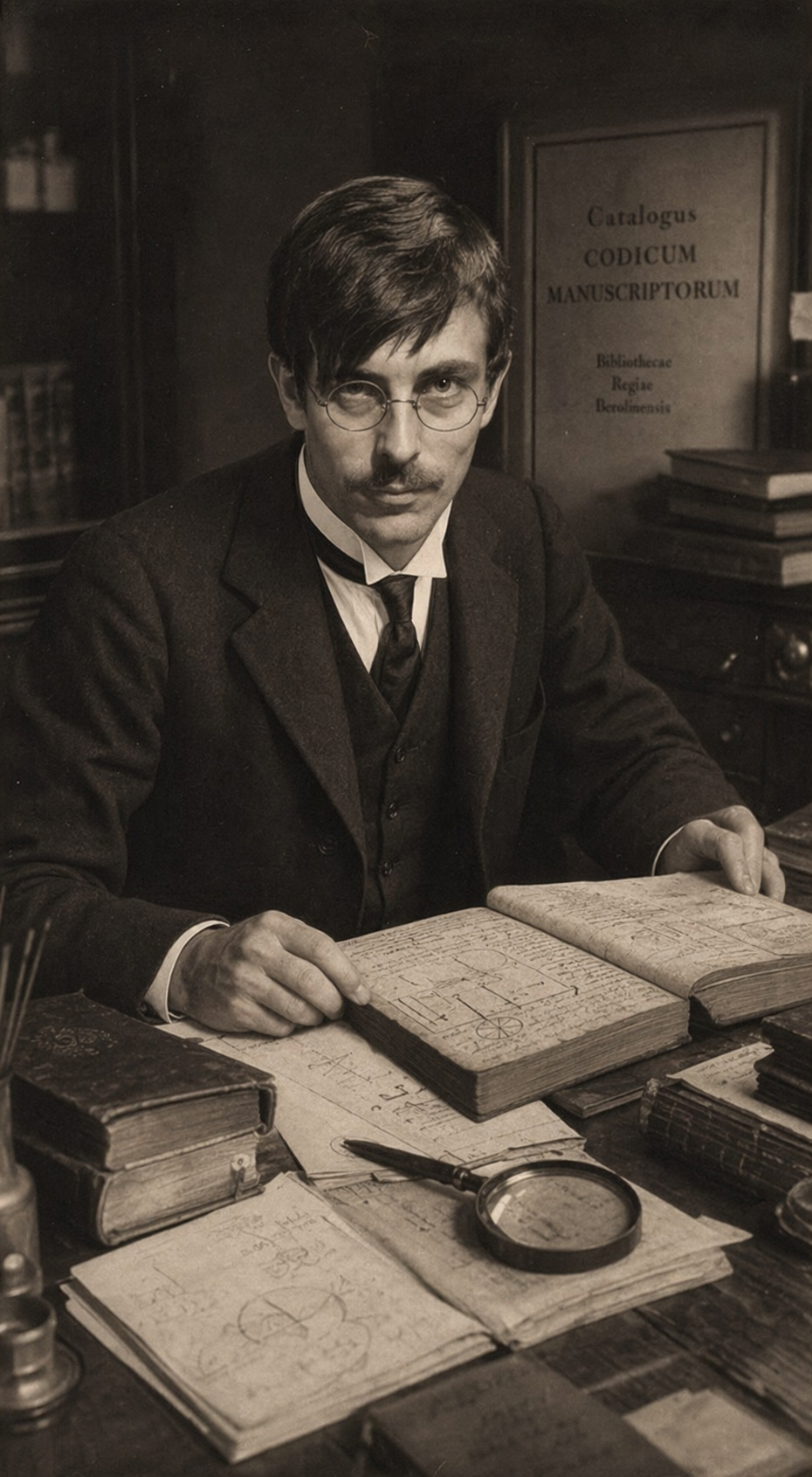
ADRIAN MERCIER BELL conservator, 1954
Trained in book repair and parchment conservation and spent much of his career restoring liturgical and early medieval material. He became known for noticing details hidden beneath repairs, guards, and later rebinding work. His notes are technical, neat, and only occasionally betray personal curiosity.
05c. 1348 CE
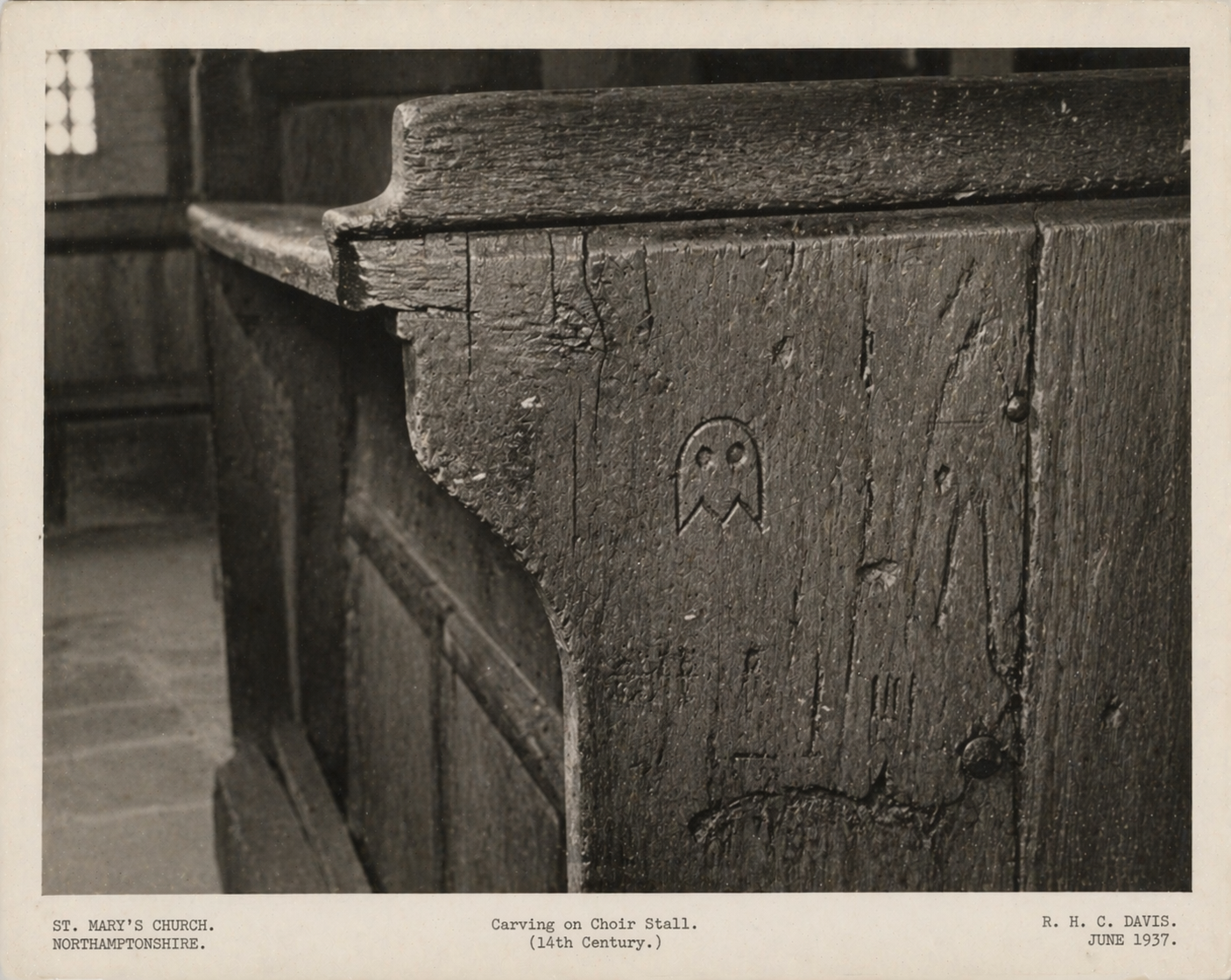
ST. MARY'S - CHURCH BENCH CARVING (PLAGUE ERA)
Location: St. Mary's Church, choir stall, England Discovered: 21 June 1937 By: Rev. Richard Henry Charles Davies (1901–1972), parish historian & amateur antiquary
fig. 5 - St. Mary's Church. Carving on Choir Stall. 14th Century. R.H.C. DAVIES JUNE 1937.
Image note: A worn section of medieval church seating in dark aged oak, with knife marks, polish wear, and a small shallow carving at hand height. The figure is rough, but clearly resembles the recurring symbol.
Case note: Davies found the carving while surveying medieval woodwork in the church. He believed the weathering and accumulated wear placed it well before the post-medieval period. Later local tradition connected the stall with plague-time prayer, though that claim remains unverified and probably romanticised.
“One cannot say who cut it, only that he had leisure enough for fear.”
- R.H.C. Davies, 1937
REV. R.H.C. DAVIES parish historian, 1937
Served as curate and later rector while compiling detailed records of rural church fittings. Not a professional historian, but a careful one, he was especially interested in unofficial marks: initials, doodles, scratched prayers, and evidence of ordinary hands in sacred spaces.
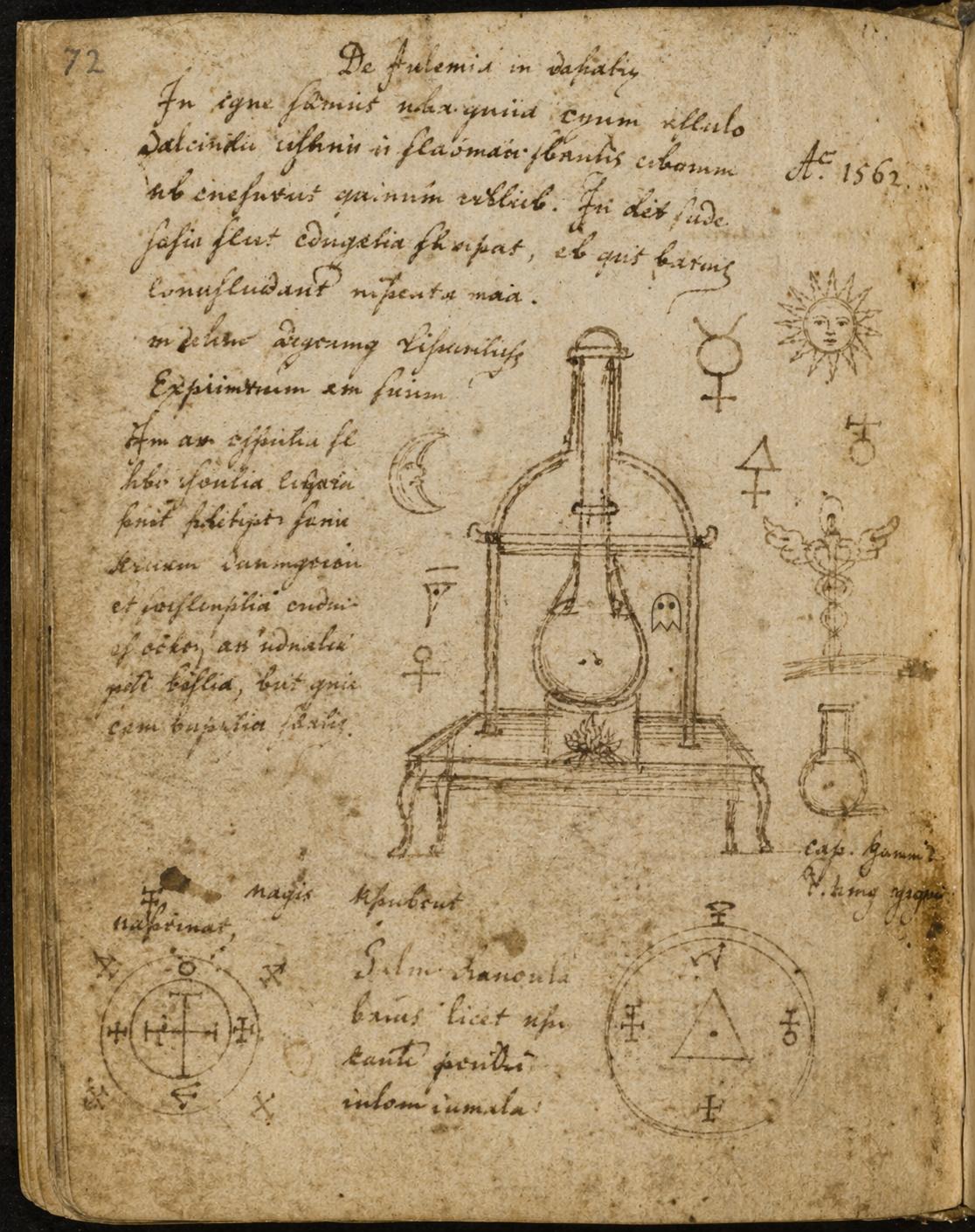
06c. 1562
ALCHEMIST'S NOTEBOOK - MATTHIEU VALLIN
Location: Notebook attributed to Matthieu Vallin (private collection, later dispersed) Discovered: 8 August 1912 By: Prof. Elias Wren Mercer (1871–1938), historian of early chemistry
fig. 6 - alchemical working notebook, attr. Vallin. ink on stained paper.
Image note: A stained manuscript page filled with diagrams, alchemical notation, apparatus sketches, and dense brown ink. Faintly visible behind one apparatus drawing is a small figure that does not match known procedural or planetary symbols.
Case note: Mercer believed the mark had gone unnoticed because it sat beneath smoke stains and overlapping annotation. He could assign no alchemical meaning to it, and its persistence beneath later layers suggested it was not a casual late addition. Later writers would call it a private emblem, but Mercer never went that far.
“I can assign no laboratory meaning to it. It behaves instead like a signature one is not meant to read.”
- E.W. Mercer, 1912
PROF. ELIAS WREN MERCER historian of early chemistry, 1912
Taught the history of natural philosophy and had a lasting interest in practical alchemical manuscripts. He was known for linking obscure visual details to broader intellectual habits, though in this case he seems to have been genuinely uncertain.
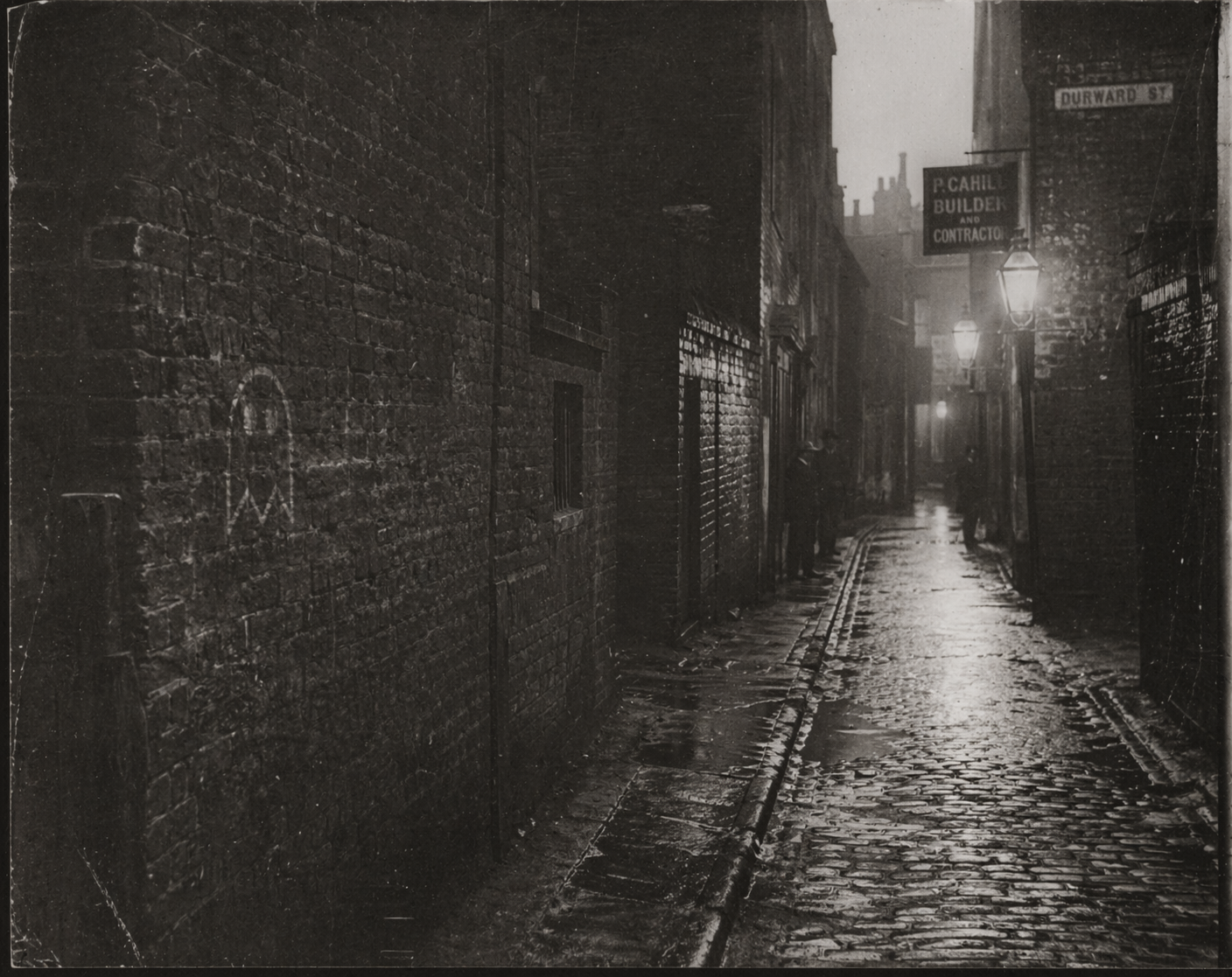
07likely c. 1888
WHITECHAPEL - WALL MARK ON BRICK
Location: Alley wall, East London Discovered: 14 October 1888 By: Arthur Bell Finch (1854–1902), freelance press photographer
fig. 7 - Whitechapel alley, October 1888. A.B. Finch, photo.
Image note: A late Victorian street view with wet brick, shadowed alley walls, and a faint worn mark visible on the masonry. On enlargement, the mark appears to form the now-familiar rounded figure.
Case note: Finch reportedly did not notice the symbol until reviewing a second print under stronger light. In context it was probably dismissed as incidental street graffiti. Only later did the image draw interest once comparisons were made with much older examples.
“It was not on my subject list, only on my wall.”
- A.B. Finch, caption margin
ARTHUR BELL FINCH press photographer (no surviving studio portrait)
Worked at the edge of journalism and commercial photography, producing London street views, accident scenes, and general documentary work. His surviving archive is patchy, but he seems to have been a practical observer with little patience for theories. - note: shared surname with the compiler of this page. almost certainly coincidence. ALMOST.
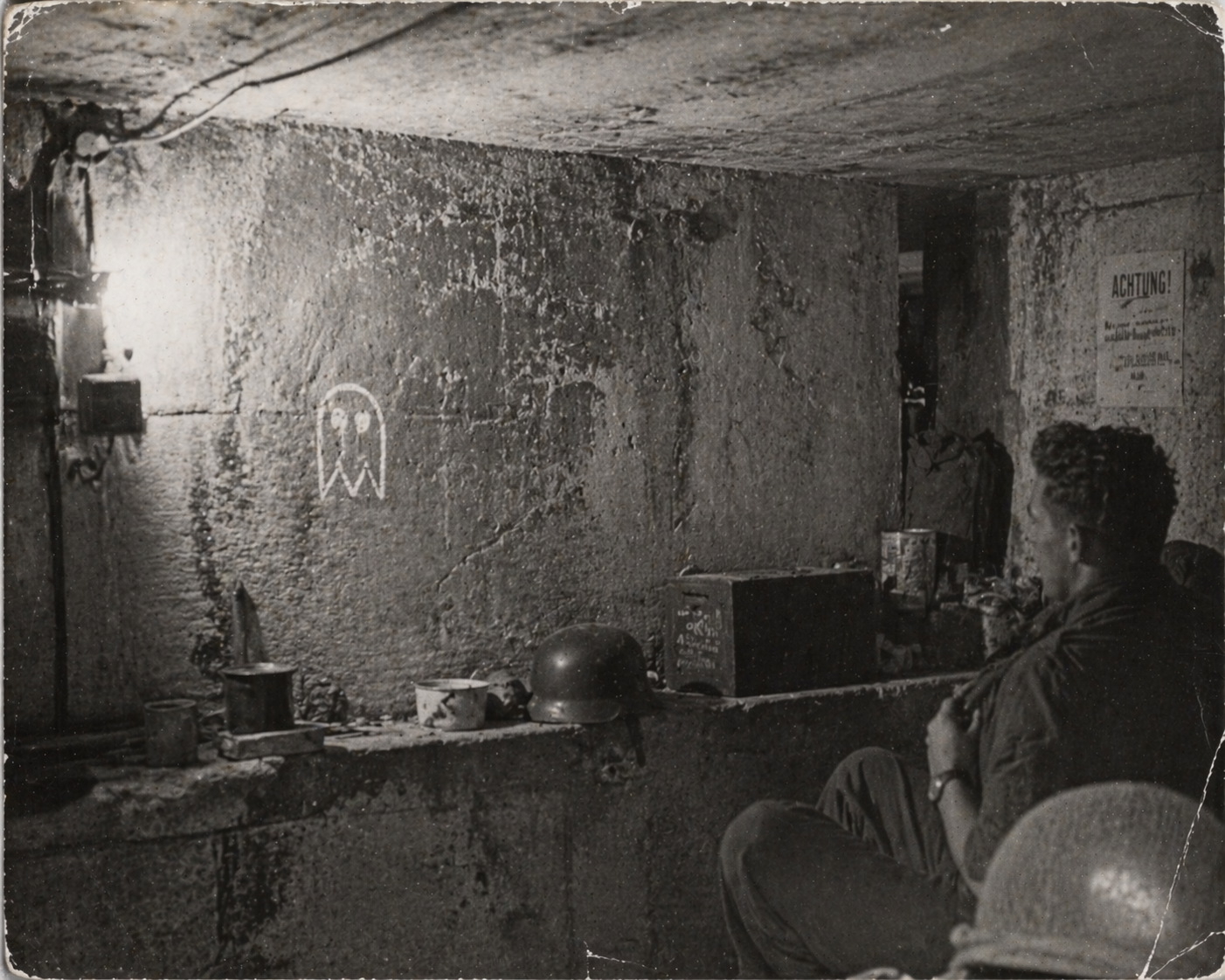
081944
CHANNEL COAST - WARTIME BUNKER WALL
Location: Concrete bunker near the Channel coast Discovered: 3 September 1944 By: Sgt. Daniel Mercer Holt (1916–1989), Royal Engineers survey section
Image note: An interior bunker wall showing damp staining, scuffed concrete, and a chalked figure drawn simply but unmistakably on the surface.
Case note: Holt copied the mark during an inspection of an abandoned defensive position. He assumed it was recent and probably meaningless - the passing amusement of a soldier with chalk and too much time. What makes it notable is not the mark itself, but how closely it resembles examples separated from it by centuries.
“Almost certainly nothing, but I have copied it anyway.”
- D.M. Holt, inspection notebook, 3 Sept. 1944
SGT. DANIEL MERCER HOLT Royal Engineers survey section (no portrait located)
Trained as a draughtsman before wartime service. His surviving inspection notebooks show a habit of copying odd signs, wall drawings, insignia, and unofficial marks alongside his formal structural notes.
091969
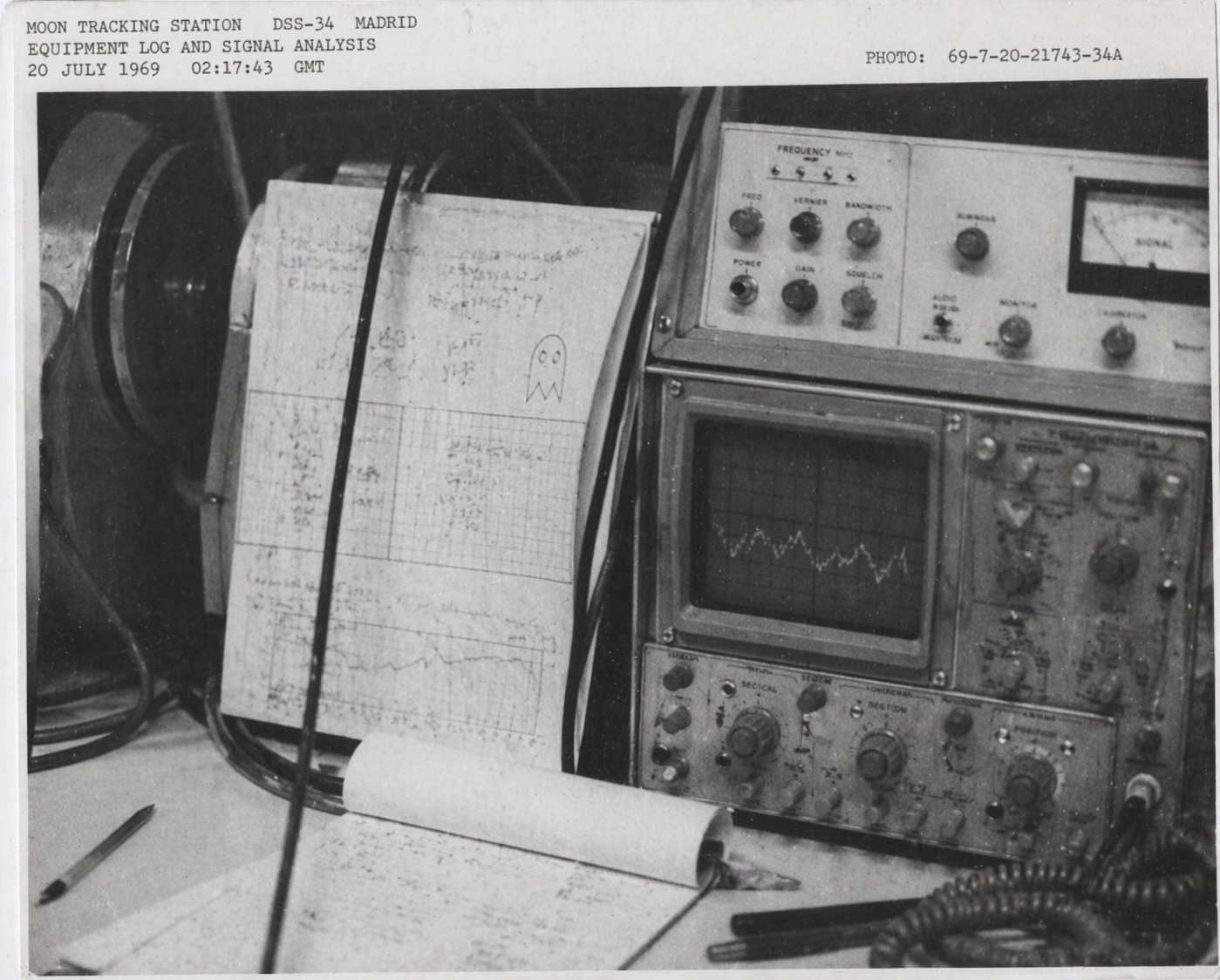
DSS-34 MADRID - MOON TRACKING STATION PAPERWORK
Location: DSS-34, Madrid deep space tracking support documentation Discovered: 20 July 1969 By: Julian Mercer Vale (1939–2008), communications technician
fig. 9 - Moon tracking station. DSS-34 Madrid. Equipment log and signal analysis, 20 July 1969.
Image note: A technical record photograph showing clipped notes, signal analysis, and equipment paperwork. On one loose sheet in the background is a small doodle-like figure resembling the recurring symbol.
Case note: The symbol was not the subject of the image and may have passed unnoticed at the time. Staff reportedly treated it as an unimportant scribble. Whether it was coincidence, copied from an older source, or drawn by someone already familiar with the symbol is impossible to say.
“Someone had drawn a little face or sheet-thing on the paperwork. We thought nothing of it.”
- J.M. Vale, remembered in interview
JULIAN MERCER VALE communications technician, c. 1969
Worked in telemetry support and logging in the late 1960s and early 1970s. Colleagues remembered him as meticulous, technically minded, and dismissive of grand theories. His scepticism makes his association with this entry all the more useful.
101996
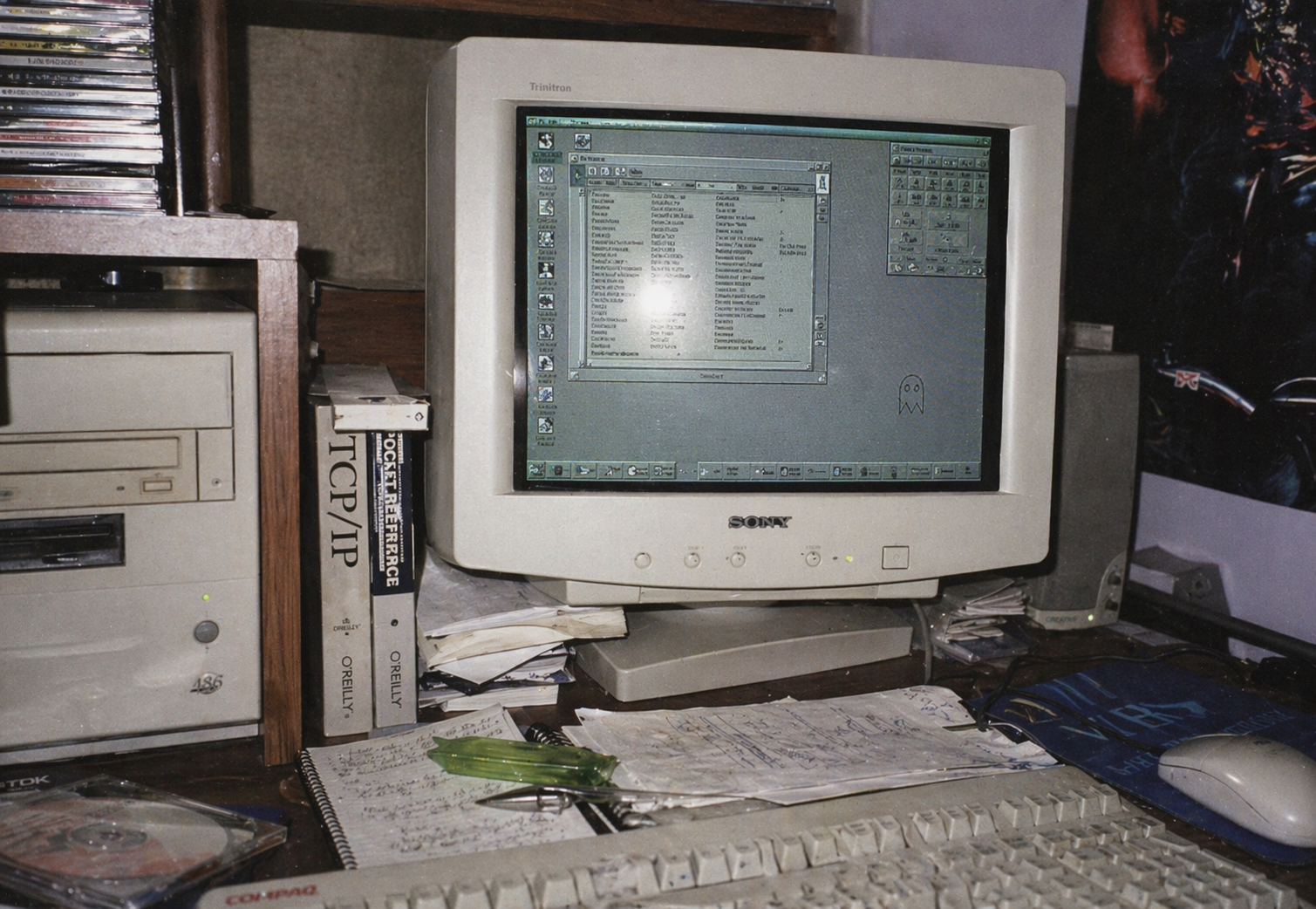
WEST YORKSHIRE - CRT MONITOR GLITCH
Location: Home computer setup, West Yorkshire, England Discovered: 11 March 1996 By: Nathaniel "Nate" Crowe (1978– ), student hobby programmer
fig. 10 - CRT screen, March 1996. unexplained sprite. repeated across resets.
Image note: A mid-1990s photograph of a CRT screen on which a small figure appears as a graphical glitch or unexplained sprite. Despite the digital setting, the shape closely echoes the older examples.
Case note: Crowe photographed the screen after claiming the same figure appeared repeatedly across resets while testing a graphics utility. He was unable to match the icon to any software assets he recognised. The original account is technical rather than dramatic, which is one reason it remains interesting.
“I assumed memory corruption until it came back looking exactly the same.”
- N. Crowe, 11 March 1996
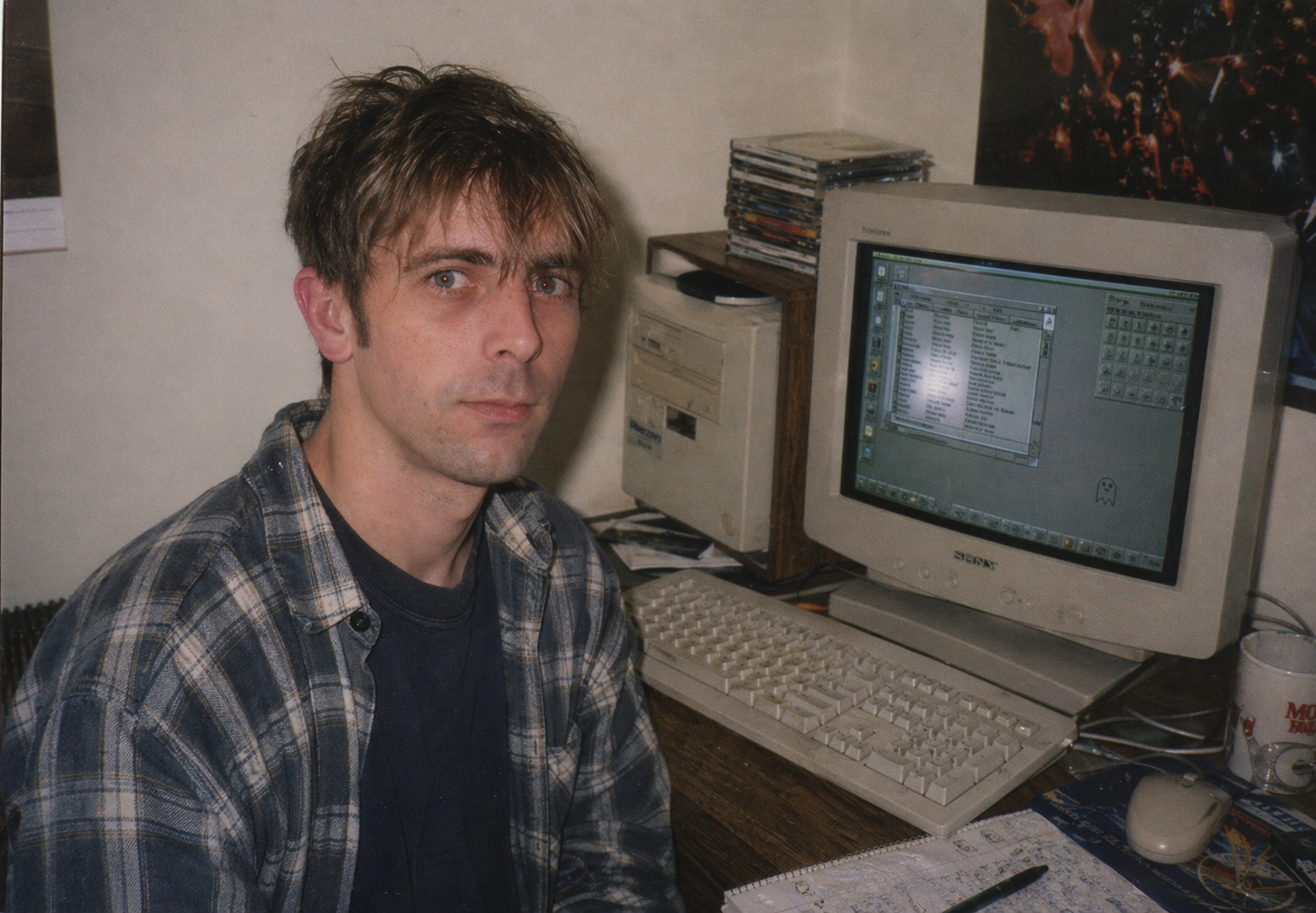
NATHANIEL "NATE" CROWE student hobbyist, 1996
A teenage computer enthusiast interested in graphics tools, old hardware, and software oddities. His notebooks combine practical troubleshooting with the occasional unnerving aside. Of the modern examples, this is one of the most frequently reproduced.
WHY I THINK IT IS WORTH COLLECTING
The simplest explanation is that this is not one symbol but many. A rounded figure with two eyes is not exactly beyond human invention. People doodle, carve, paint, and scratch similar shapes constantly. If all I had were the cave wall and the computer glitch, I would never have bothered making a page about it.
The trouble is that several of these examples do not just resemble one another in a general way. They resemble one another in posture, proportion, and placement. The form stays unusually stable even as the medium changes: pigment on rock, pigment on plaster, incised ceramic, ink on vellum, knife-cut wood, pen on paper, chalk on concrete, biro on technical notes, and then something resembling a tiny digital sprite. That is what moved it from curiosity to pattern.
I also keep returning to the tone of the discoverers' comments. Most of them do not sound like people announcing revelations. They sound like sensible people writing down something they would prefer not to find memorable.
A FEW POSSIBLE EXPLANATIONS
I do not particularly like any of these, but they are the current options.
➊INDEPENDENT REPETITION.
The symbol is simple enough that it could be rediscovered by chance in every era.
This is the explanation I would choose if forced.
➋TRANSMISSION.
Someone sees it, copies it, passes it on, and eventually it resurfaces elsewhere without its meaning. This would explain the later examples reasonably well, but does very little for the earliest ones unless one is willing to imagine absurd continuity.
➌A MIXTURE.
Some genuine repetitions, some chance imitations, some outright misreadings by me or by earlier cataloguers. That is probably the responsible answer and therefore, naturally, the least satisfying.
➍AND THEN THERE IS THE ANSWER ONE IS NOT SUPPOSED TO PREFER: that the figure keeps appearing because someone keeps putting it there.
ON THE DISCOVERERS
One thing I had not expected when I began collecting these was how often the story narrowed down not to famous excavators or celebrated scholars, but to quiet record-keepers. Assistants. Surveyors. Conservators. Parish historians. Technical staff. The sort of people who notice things because noticing things is most of their job.
That may mean nothing at all. It may simply be that unusual details survive only because some careful, under-credited person wrote them down. Still, it does create a peculiar continuity in the record. The symbol is often found not by the loudest voice in the room, but by the person whose instinct is to make a note and move on.
INVITATION FOR SUBMISSIONS
THIS PAGE IS INCOMPLETE.
There are almost certainly more examples, and almost certainly many false ones too. I am interested in both. If you have seen a similar figure in an archive scan, excavation report, local church carving, manuscript margin, street photograph, military record, old notebook, technical paperwork, or software glitch - send it. Date, source, location, and any original caption are especially useful. Even if it turns out to be nothing more than a stain or a joke, I would rather rule it out than miss it.
I am particularly interested in:
▸ medieval marginalia
▸ unpublished excavation plates
▸ Victorian street photography
▸ wartime wall markings
▸ late-1960s technical paperwork
▸ odd repeated graphic glitches from early home computing
If enough new material turns up, I will add a second page for disputed or unverified appearances.
For now, this is where the record stands: ten appearances across something like fourteen thousand years, each small enough to dismiss, together just awkward enough to keep.
I do not know what the symbol means.
I am no longer convinced it means nothing.
- CLIVE FINCH
★ SIGN THE GUESTBOOK ★
If you've read this far, leave your name. Tell me what you thought.
Tell me if you've seen the figure. Tell me I'm wasting my time. All responses welcome.
Dates, descriptions, and biographical sketches have been compiled from image annotations, secondary references, and surviving notes where available. Some entries necessarily involve reconstruction from fragmentary captions or catalogue context. Where uncertainty exists, I have tried to preserve it.